
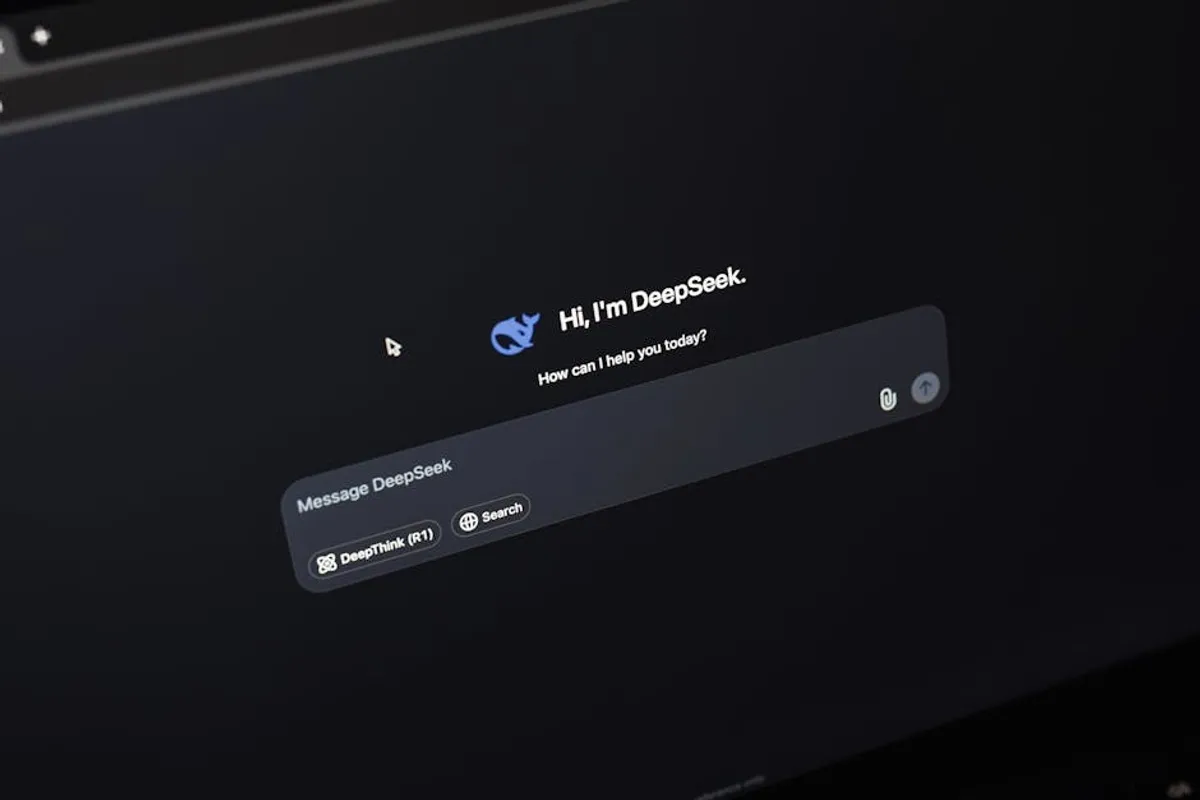
Analyzing the search profile of redeepseek.com requires a nuanced understanding of the current artificial intelligence landscape, specifically the shift toward open-source and high-performance large language models. As users become increasingly wary of data privacy and the proprietary "black box" nature of mainstream AI providers, domains like redeepseek.com emerge as potential hubs for those seeking alternatives or deeper technical control. For security-conscious users, the intent behind visiting such a domain is rarely casual; it is typically driven by a need for transparency, local deployment options, or verification of AI-generated outputs. Understanding how this domain captures and channels that intent is essential for marketers and publishers operating in the high-stakes intersection of AI and cybersecurity.
What redeepseek.com Appears to Cover
The domain redeepseek.com occupies a specific niche that likely centers on the documentation, implementation, and security auditing of the DeepSeek model family. In a market saturated with generic AI wrappers, this domain appears to focus on the technical "re-deployment" or "re-evaluation" aspects of these models. This includes providing granular details on model architecture, parameter efficiency, and the specific ways in which these models can be integrated into existing enterprise stacks without compromising internal data integrity.
Content on redeepseek.com likely bridges the gap between high-level AI capabilities and the practical, often restrictive, requirements of IT security departments. This might involve detailed breakdowns of how the models handle tokenization, the specific datasets used for fine-tuning, and the protocols for ensuring that model weights are verified before deployment. By focusing on these technical specifics, the site positions itself as a resource for the professional who is tasked with implementing AI but is constrained by strict compliance and security mandates.
Furthermore, the site likely addresses the "re-" prefix of its name by exploring iterations, forks, or specific modifications of the original DeepSeek code. This is particularly relevant for security-conscious users who may be looking for "hardened" versions of the model or configurations that disable telemetry and external API calls. The coverage likely extends to comparative analyses of different model versions, helping users determine which iteration offers the best balance of performance and data sovereignty.
Where Its Search Traffic May Come From
The traffic profile for redeepseek.com is likely characterized by a high concentration of technically proficient users located in regions with strong tech hubs and rigorous data protection laws. We can expect a significant portion of the audience to originate from Western Europe and North America, where the GDPR and similar frameworks force companies to be extremely selective about the AI tools they adopt. Additionally, there is likely substantial interest from the Asia-Pacific region, given the origins of the underlying DeepSeek technology and the rapid pace of AI adoption in those markets.
From a referral perspective, traffic likely flows from developer-centric platforms and security forums. Users who frequent repositories or technical discussion boards often find their way to redeepseek.com when searching for specific configuration fixes or security patches that are not addressed in mainstream documentation. This creates a high-intent audience that is less interested in general AI news and more focused on solving specific implementation hurdles.
Organic search likely plays a dominant role in the traffic mix, with queries being highly specific. Rather than broad terms, the traffic is probably driven by long-tail keywords related to model deployment, local hosting, and security vulnerabilities. This suggests that the site’s visibility is built on its ability to answer complex technical questions that broader tech news sites overlook. The audience is likely composed of DevOps engineers, security researchers, and CTOs who are performing due diligence on new AI tools.
Search Intent Behind the Subject
The search intent for redeepseek.com is predominantly informational but with a strong lean toward "commercial investigation" for technical stakeholders. Security-conscious users are not just looking for what the model can do; they are searching for how it does it and what risks it introduces. This intent can be categorized into three distinct layers of inquiry.
First, there is the intent of verification. Users may land on redeepseek.com to confirm the security claims made by the original model developers. They are looking for independent audits, community-verified benchmarks, and reports on potential backdoors or data leakage risks. This is a "trust but verify" mindset where the user is seeking third-party validation before moving a project from a sandbox environment to production.
Second, there is the intent of local implementation. A primary concern for security-focused professionals is the risk of sending proprietary data to third-party servers. Search queries leading to redeepseek.com often revolve around "how to run DeepSeek locally" or "DeepSeek air-gapped deployment." The intent here is to bypass the traditional SaaS model in favor of a self-hosted solution that keeps data within the company’s firewall.
Third, there is a troubleshooting intent. When a security-hardened environment breaks an AI integration—perhaps due to restricted network permissions or encrypted data flows—users turn to specialized domains to find workarounds. The intent is to find specific code snippets or configuration files that allow the model to function within a highly restricted security architecture. This segment of the audience is looking for practical, actionable solutions to technical blockers.
Why Traffic May Rise or Fall
The visibility of redeepseek.com is closely tied to the broader volatility of the AI industry and the evolving regulatory environment. A major security breach in a mainstream AI provider often triggers a surge in traffic to alternative model resources as companies scramble to diversify their AI portfolios. Conversely, if the core technology the site covers becomes obsolete or is superseded by a more secure "out-of-the-box" solution, traffic could see a significant decline.
Regulatory shifts, such as new mandates regarding AI transparency or data residency, can also act as catalysts for traffic growth. As governments demand more clarity on how AI models process information, users will seek out domains that provide the technical depth required to meet these new standards. redeepseek.com stands to benefit from any movement that prioritizes model explainability over sheer processing power.
On the technical side, the site's organic performance is sensitive to the frequency of model updates. Each new release of the underlying DeepSeek architecture creates a "content gap" that redeepseek.com must fill. If the site is slow to provide security analyses of new versions, it risks losing its authority to faster-moving competitors or official documentation. Furthermore, the rise of "AI-generated search" could impact traffic; if search engines can synthesize the technical answers directly from the site's content, the click-through rate to the domain itself may decrease even if its information remains highly relevant.
How the Site Could Improve Organic Visibility
To strengthen its position for security-conscious queries, redeepseek.com should focus on expanding its coverage of specific compliance frameworks. Creating content that maps the model’s capabilities directly to requirements like SOC2, ISO 27001, or HIPAA would capture high-value organic traffic from enterprise security teams. This moves the site from being a general technical resource to a specialized compliance tool.
Technical SEO improvements should prioritize the structured presentation of data. Using schema markup for technical documentation and software source code can help search engines better understand the granularity of the information provided. Additionally, the site could benefit from a more aggressive internal linking strategy that connects broad model overviews to deep-dive security patches and configuration guides. This not only improves crawlability but also keeps high-intent users on the site longer as they move through the different stages of their research.
Another avenue for visibility is the creation of "security checklists" or "deployment templates." These types of assets are highly linkable and often serve as the "seed" for organic growth. By providing downloadable, practical resources that help a security officer sign off on a deployment, redeepseek.com can establish itself as a primary authority in the space. Investing in original research, such as latency tests on different security-hardened hardware configurations, would also provide the kind of unique data that attracts high-quality backlinks from other technical publications.
What to Check Before Trusting Traffic Estimates
When evaluating the traffic potential of redeepseek.com, it is vital to distinguish between brand-driven traffic and intent-driven traffic. Because the domain name contains the name of a popular AI model, a significant portion of its search volume may come from users who are actually looking for the official DeepSeek website but landed on redeepseek.com by mistake. This "navigational noise" can inflate traffic estimates without contributing to actual engagement or conversion.
Users should also account for the "hype cycle" effect. AI-related domains often experience massive spikes in traffic following a viral news story or a new model release. These spikes are rarely sustainable and can give a false impression of the site's long-term organic health. It is more useful to look at the baseline traffic during "quiet" periods to understand the site's true authority among its core professional audience.
Finally, the technical nature of the audience means that a higher-than-average percentage of users likely employ ad-blockers, VPNs, and privacy-focused browsers. This can lead to underreporting in standard analytics suites. When assessing the value of the traffic, the quality of the "exit intent"—where users go after visiting the site—is often more telling than the raw number of sessions. If users are moving from redeepseek.com to GitHub repositories or enterprise procurement pages, the traffic is far more valuable than the numbers might initially suggest.
Frequently Asked Questions
Is redeepseek.com an official source for AI models?
The domain appears to be an independent resource focused on the implementation and security analysis of specific AI models rather than being the official primary distribution point for the developers. It serves as a secondary technical layer for professionals needing deeper implementation details.
Why would a security professional use redeepseek.com instead of official documentation?
Official documentation often focuses on features and ease of use. Security professionals use independent domains like redeepseek.com to find unbiased audits, "hardened" configuration guides, and community-reported vulnerabilities that may not be highlighted by the original creators.
How does search intent for redeepseek.com differ from generic AI news sites?
Search intent here is highly transactional and technical. While a news site attracts users looking for "what is AI," redeepseek.com attracts users asking "how do I secure this specific model on my private server," indicating a much closer proximity to a final deployment decision.
Can the traffic on redeepseek.com be used to gauge AI market trends?
Yes, but specifically within the "self-hosted" and "open-weights" segments of the market. Rising traffic to this domain suggests a growing interest in moving away from centralized AI providers toward more controlled, private implementations.